He ran through the rain with mud on his boots and fear in his chest. Tomas had deserted the army three nights before, and now soldiers hunted him across every road and village. When he reached the city docks, a woman with sharp eyes pulled him into a hidden cellar. “You want to live?” she asked. “Then you must disappear.”
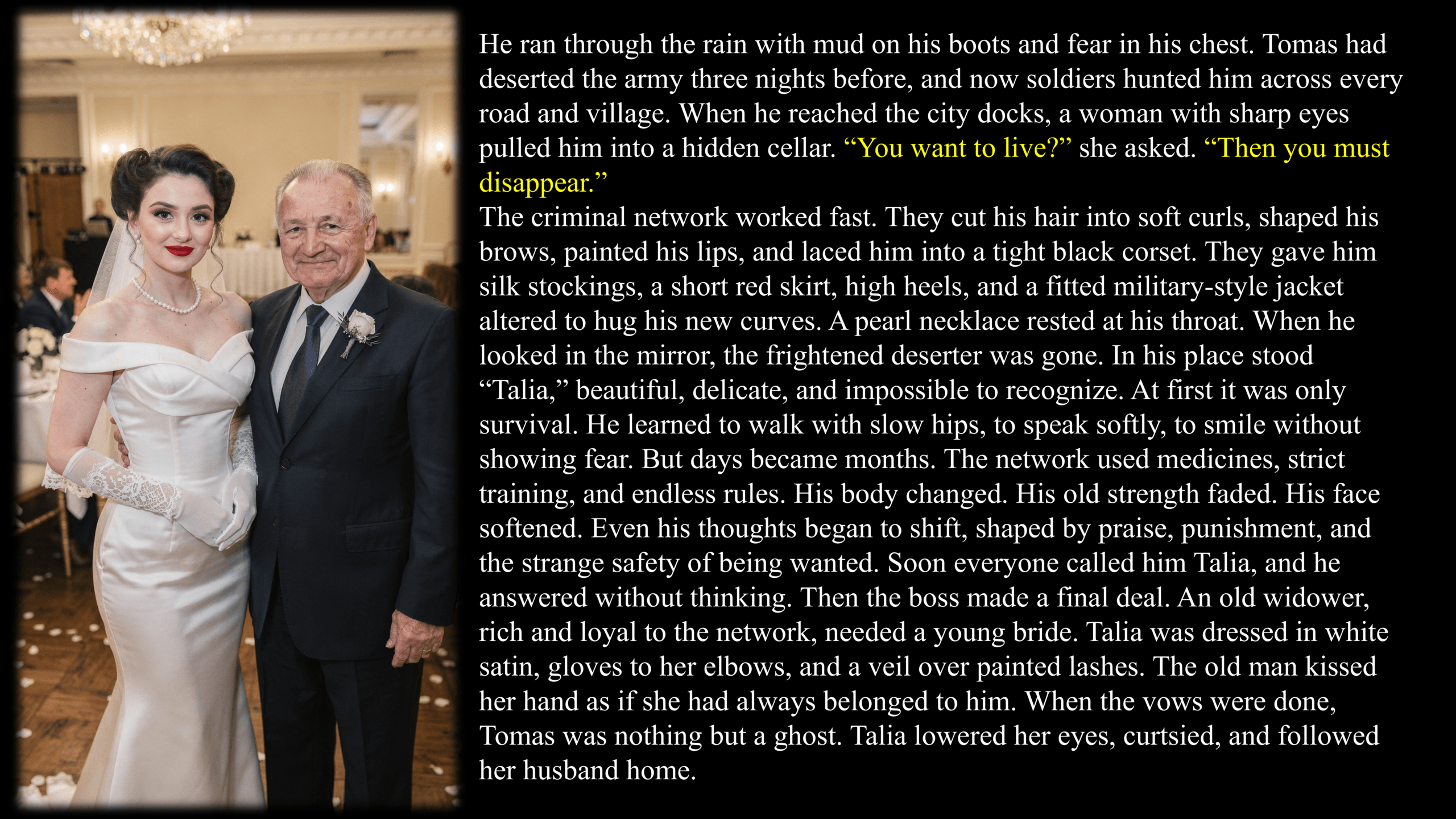
The criminal network worked fast. They cut his hair into soft curls, shaped his brows, painted his lips, and laced him into a tight black corset. They gave him silk stockings, a short red skirt, high heels, and a fitted military-style jacket altered to hug his new curves. A pearl necklace rested at his throat. When he looked in the mirror, the frightened deserter was gone. In his place stood “Talia,” beautiful, delicate, and impossible to recognize. At first it was only survival. He learned to walk with slow hips, to speak softly, to smile without showing fear. But days became months. The network used medicines, strict training, and endless rules. His body changed. His old strength faded. His face softened. Even his thoughts began to shift, shaped by praise, punishment, and the strange safety of being wanted. Soon everyone called him Talia, and he answered without thinking. Then the boss made a final deal. An old widower, rich and loyal to the network, needed a young bride. Talia was dressed in white satin, gloves to her elbows, and a veil over painted lashes. The old man kissed her hand as if she had always belonged to him. When the vows were done, Tomas was nothing but a ghost. Talia lowered her eyes, curtsied, and followed her husband home.